Supported by technological advances, universities increasingly embrace blended learning. This means students engage with content both inside and outside traditional classrooms, working synchronously and asynchronously, individually and collaboratively. However, designing effective blended learning experiences is challenging for teachers. For example, learning activities should align with learning goals, and appropriate learning formats should match established pedagogical frameworks.
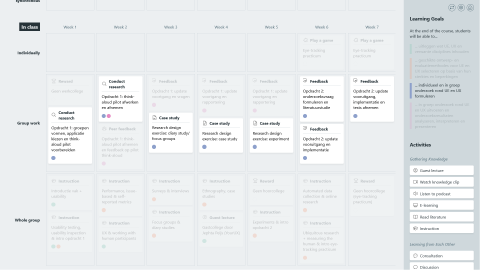
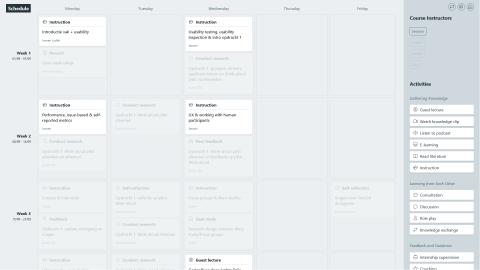
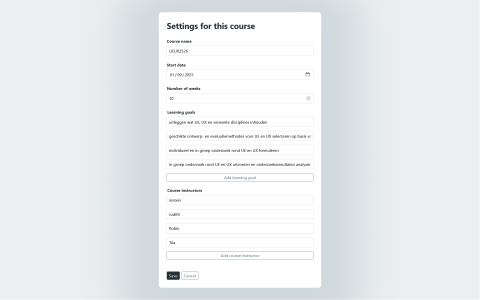
To support university teachers with planning their blended learning courses, the Centre for Academic Teaching and Learning at Utrecht University has developed a physical Blended Learning Game. This game includes a planner that helps educators map out their courses (see picture above). While the physical planner has proven valuable, it raises an intriguing question: How can a digital version enhance the planning experience through intelligent visualisations and recommendations? The potential is compelling: digital visualisations could reveal patterns in curriculum design, highlight gaps between learning goals and activities, and provide real-time feedback on pedagogical alignment. In addition, recommendation algorithms could suggest suitable activities and alignment with blended learning theories.